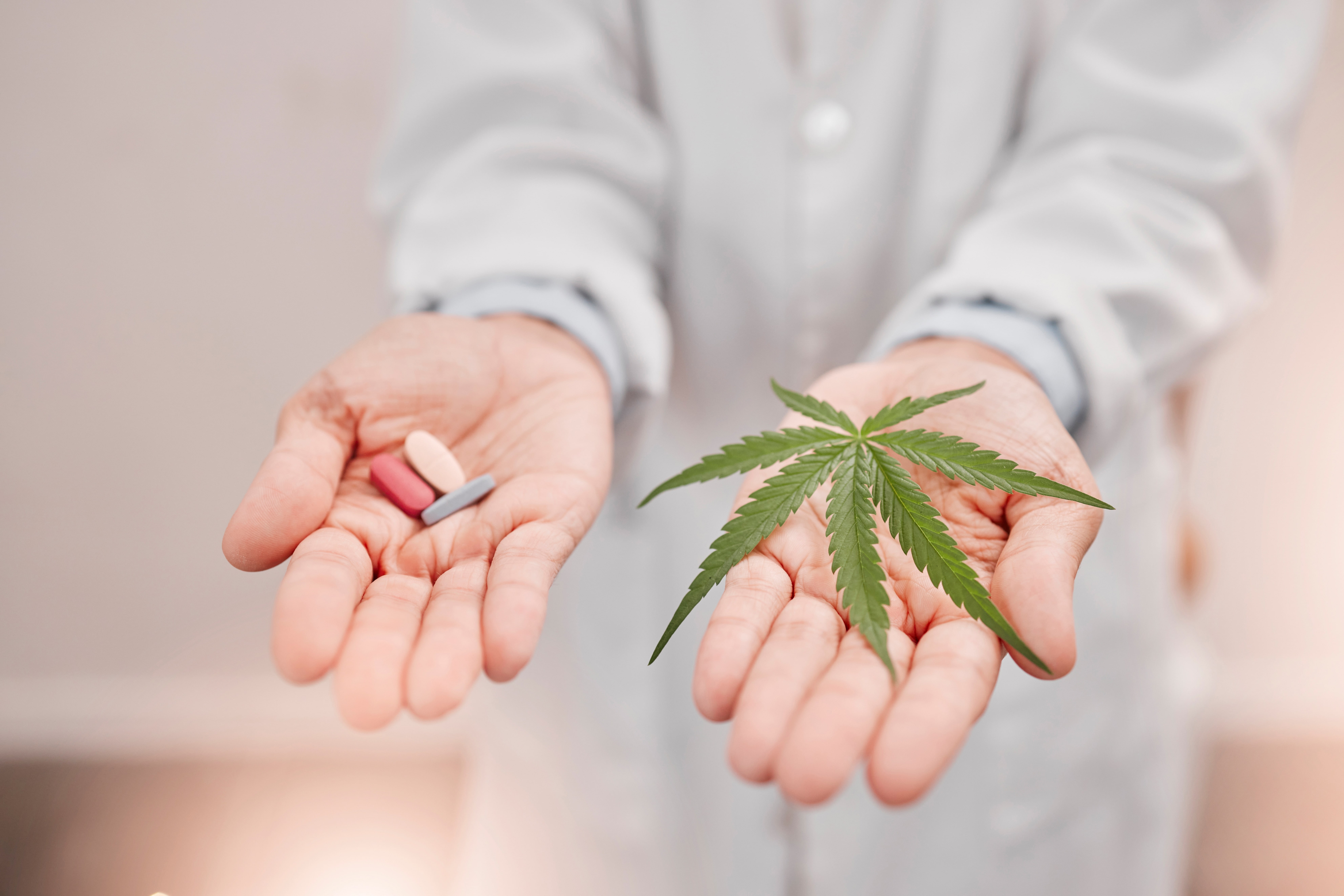
CBD and Migraines: How CBD Helps with Headaches

Migraine, a word that evokes unpleasant feelings in many of us. If you’ve ever had one, you know that it’s not just an ordinary headache that can be solved with a pill and a glass of water. A migraine can knock a person out of normal functioning for hours or even days. Severe throbbing pain, sensitivity to light or sound, nausea… for many people, this is a reality they have to face regularly.
If you are one of them, you have probably tried all possible medications, alternative therapies, and other methods. But what really helps? In recent years, cannabidiol, known as CBD, has come to the forefront of interest, helping people with many health problems. But what is the reality? Is CBD really effective for headaches and migraines?
What exactly is CBD and how does it work in the body?
What is CBD? Cannabidiol, to give it its full name, is one of many substances naturally found in the cannabis plant (Cannabis sativa). Many people think it is addictive, but the opposite is true.
Unlike the more well-known THC, CBD has no psychoactive effects, meaning it does not cause intoxication, addiction, or changes in perception. This is why it is legal and safe for everyday use. You can read more about the differences in our article “CBD vs. THC.”
CBD acts in the human body through the endocannabinoid system (ECS). This system plays a huge role in maintaining balance in the body. For example, it influences sleep, mood, immunity, stress, and pain perception.
The endocannabinoid system consists of CB1 and CB2 receptors, which respond to substances naturally produced by our bodies. This balance can be disrupted at any time, for example by stress, fatigue, or chronic pain. CBD helps to stabilize these processes again.
Thanks to this, it is increasingly being researched as a natural remedy for various types of pain, including migraines. It does not act like a conventional medicine, which only suppresses symptoms, but helps the body respond naturally to the causes of imbalance.
You can read more information in our article “What is cannabidiol (CBD) and what are its effects?”.
Migraine and Chronic Pain: Understanding the Enemy That Paralyzes Your Life
In order to combat migraines effectively, you must first get to know your opponent inside out. A migraine is not just a “severe headache.” Anyone who has experienced one knows that it is a complex neurological disorder that can significantly affect and disrupt quality of life. The pain often comes on unexpectedly and can knock a person out of normal functioning for hours or days. Many describe the feeling as if their “head is pulsing from the inside.”
According to data from the World Health Organization (WHO), headaches are among the most common neurological disorders worldwide. In 2021, approximately 3.1 billion people suffered from headaches, representing roughly 40% of the global population.
Migraines are caused by a combination of several factors, specifically genetic, hormonal, and external. Lifestyle also plays a significant role. Stress, irregular sleep, prolonged tension, and even certain foods can trigger an attack, and let’s be honest, in today’s world, these factors are simply part of everyday life. Experts agree that during a migraine, changes in blood flow and chemical balance occur in the brain, which in turn affects nerve signals and sensitivity to pain.
Can you tell the difference between a migraine and a regular headache? Typical migraine symptoms include:
- throbbing pain, usually on one side of the head,
- hypersensitivity to light, sound, or smells,
- nausea and vomiting, which may last for several hours,
- impaired vision or so-called aura, i.e., flashes and blurred contours,
- fatigue, irritability, and difficulty concentrating after the pain subsides.
Seizures may occur only occasionally, but in some people they recur regularly, even several times a month. In such cases, this significantly disrupts the person’s functioning and often excludes them from social life.
The problem is that while medications can help alleviate migraine symptoms, their effect is usually temporary. And even with frequent use, they can cause side effects such as stomach irritation or fatigue.
Many people therefore seek help in natural methods that are not only a means of relieving pain, but also help to address the root cause of the problem. One such option is the use of CBD for migraines, which is gaining attention from experts and users alike for its natural and gentle effects.
How CBD can help with migraines
Studies suggest that CBD oil for migraines may work in several ways at once:
- Relieves pain and inflammation: CBD has anti-inflammatory properties and acts on pain receptors in the nervous system. It helps reduce the activity of signals that the brain perceives as pain.
- Relieves tension and stress: Migraines are often linked to stress, insomnia, or muscle tension. CBD oil can promote a feeling of relaxation, improve sleep quality, and help the body better cope with stressful situations.
- Stabilizes the nervous system: The endocannabinoid system is involved in balancing neurotransmitters that affect nerve activity. CBD can help stabilize the nervous system and reduce the frequency of seizures.
And what do studies say?
For example, in 2016, a professional article in the journal Pharmacotherapy highlighted the findings of research that examined how the therapeutic use of cannabis can affect the occurrence of migraine attacks. The study involved 121 adults with approved medical cannabis use, whose treatment was supervised by healthcare professionals. The results showed that the vast majority of participants (approximately 85%) experienced a significant reduction in the frequency of migraines.
Also, in 2022, a systematic review evaluated the efficacy and safety of CBD in the treatment of chronic pain based on several clinical studies. The results suggested that CBD has the potential to alleviate chronic pain and is generally well tolerated by patients, although further research is needed to confirm these findings.
Although research is still ongoing and there are not yet many studies available on how CBD helps with migraines, a number of scientific papers and user experiences confirm that CBD oil can provide relief from headaches. Either as a supplement to conventional treatment or as a preventive measure.
Using CBD for migraines and headaches
When choosing the right CBD for migraines, quality also plays an important role. Not all CBD oils are the same. However, if you are looking for truly effective CBD for migraines, the best choice is full spectrum CBD oil (i.e., oil with a full spectrum of cannabinoids).
Why full spectrum CBD is a better choice for combating migraines
Full spectrum CBD oil contains not only cannabidiol (CBD) itself, but also other naturally occurring substances from the cannabis plant, such as CBG, CBC, CBN, trace amounts of THC (within legal limits), terpenes, and flavonoids.
These substances together create what is known as the “entourage effect.” In practice, this means that their effects reinforce each other and help the body better utilize the potential of CBD itself. In other words, their effects are synergistic.
In the case of migraines, this means that the body can respond more quickly and effectively, not only in terms of pain relief, but also in reducing tension, anxiety, and inflammation, which are often associated with migraines.

What is the dosage of CBD for pain and migraines?
It is important to know that CBD oil affects everyone differently. It depends on body weight, sensitivity, frequency of migraines, and overall health. It is generally recommended to start with a lower dose and gradually increase it until the desired effect is achieved.
Recommended dosage of our CBD oils for various ailments
- Prevention: 2–15 mg of CBD oil per day
- Immunity: 2–15 mg CBD oil/day
- Depression: 5–15 mg of CBD oil/day
- Chronic pain: 5–25 mg of CBD oil per day
- Sleep, anxiety: 5–15 mg CBD oil / dayn
- Serious illnesses: 25–100 mg of CBD oil/day
Acute use of CBD during a migraine attack
If you feel a migraine coming on (i.e., you are in the aura phase or the early stages of pain), you can take a higher acute dose, such as two to three times your usual daily dose.
Time plays a key role in migraines. The sooner you use CBD and counteract the migraine, the greater the chance that the attack and headache will not worsen. Quickly administering CBD drops under the tongue ensures the fastest absorption of the active ingredients. In addition to oral use, many people also like to vaporize CBD using a vaporizer pen. This method of use has an almost immediate onset of effect thanks to direct absorption into the lungs.

The most common forms of CBD use for migraines
- CBD oils and drops: applied under the tongue so that the active ingredients are quickly absorbed into the bloodstream.
- CBD capsules: a practical and precisely dosed form of use.
- CBD ointments: these can help locally, for example, to relieve tension in the temples, neck, or back of the head.
It is also important to emphasize that CBD is not a medicine, but a dietary supplement that helps the body find its natural balance.
Conclusion: The natural path to relief and balance
A migraine is not just an ordinary headache. It is a condition that severely interferes with everyday life, work, and relationships. Anyone who suffers from it knows how difficult it is to function when you are struck by that unbearable headache.
CBD is coming to the forefront in the fight against migraines and headaches precisely because it is a natural and safe supplement for the body. It helps the body respond better to stress, promotes balance, and can be part of a broader approach to migraine prevention without the need to immediately resort to strong medications.
It is not a substitute for professional medical treatment. However, by using CBD oil, you have the opportunity to support your health in a gentle and natural way.
Zdroje
Author of the article

Študujem ekológiu, environmentalistiku a momentálne aj udržateľný urbanizmus, no o témy konopy sa zaujímam už od strednej. Najviac ma ale fascinuje to ako veľa rôznych vecí sa z jednej rastliny dá vyrobiť. Dá sa jesť, lieči ľudí aj planétu, môžete si ju obliesť, postaviť z nej dom aj auto. Keby bolo na mne, pestovala by sa povinne, haha!
Other articles
CBD for chronic pain
Chronic pain can limit your quality of life and everyday activities. CBD for chronic pain offers ...