Does CBD Harm Your Liver or Kidneys?
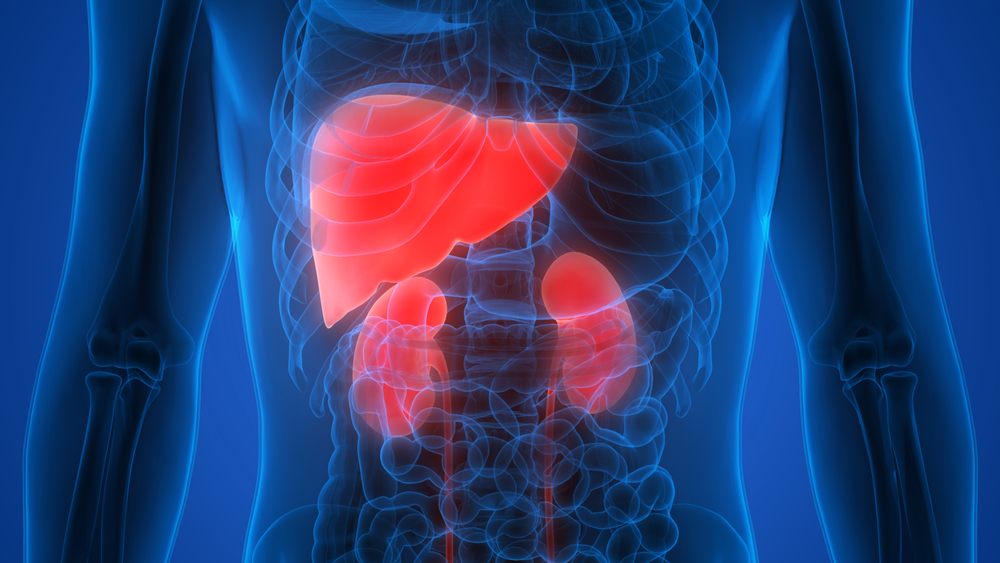
I will admit it — when I first started reading about CBD, the first thing that crossed my mind was: “okay, but what is my liver going to make of this if I take it every day?” And I probably was not alone. With vitamins we do not worry about it, with coffee we hardly give it a second thought, but anything new we try and we automatically want to know whether it will cause us problems down the line.
So let us get into it. In this article I will tell you what the latest studies have actually found about how CBD and the liver get along, whether you need to worry about your kidneys, and when you really should be careful. No medical lectures, no impenetrable academic texts — just the facts the way a friend who has done their homework would tell them.
Short and Clear: Should You Worry or Not?
Here is the truth in brief. For most people who take CBD in sensible amounts (say 10–30 mg a day), there is no reason to stress. Neither the liver nor the kidneys will even notice.
But there are two scenarios where it pays to be alert:
- You are taking genuinely high doses — around 200 mg or more per day, which people typically start at for chronic pain or anxiety
- You are combining CBD with specific medications — especially valproate (Convulex, Depakote), if you have ever heard that name
And then there is a separate category: people whose liver or kidneys are already not in the best shape. There, a conversation with your doctor is entirely appropriate — not out of excessive caution, but simply so you are not caught off guard.
For everyone else, let me explain why that is. No panic needed.
How the Liver and CBD Actually Get Along
Think of your liver as a very clever recycling plant. Whatever you eat, drink, or place under your tongue, most of it passes through it and the liver sorts it out — uses some, transforms some, sends some off as waste. CBD is no exception.
For this “sorting service”, the liver has a group of enzymes that scientists call CYP450. They are basically the chefs in that plant. And here is the important detail: the same chefs who process CBD are also responsible for metabolising a large proportion of commonly prescribed medications.
What does that mean in practice? Imagine a restaurant with five chefs. Normally they handle a hundred orders an hour. When an extra large order comes in, those five chefs have to split their attention — some dishes come out more slowly. With medications it works similarly: if you take a drug that is processed through the same enzymes as CBD, the blood level of that drug may end up slightly different from what your doctor expected.
Which medications come up most often? Blood thinners (warfarin), certain antiepileptics, SSRI antidepressants, sedatives, blood pressure medications, and some antibiotics.
All of this can be managed by your doctor once they know you are taking CBD. You just need to tell them. It is not a reason to rule out CBD — it is a reason not to keep secrets from your doctor.
If you are interested in exactly how CBD works in your body from start to finish, we wrote a dedicated article about it.
What Came Out of the FDA in August 2025
This is the new piece of the puzzle that caught the whole CBD world’s attention. The US FDA ran a proper study — they took 201 healthy adults, gave them different doses of CBD (or placebo, so they could compare) and watched what happened over 28 days.
The doses were higher than typical wellness amounts — around 250 to 550 mg per day. Think of that as five to ten standard therapeutic doses all at once.
And here is what they found: in 8 people out of 151 in the CBD group (5.6%), liver enzymes rose above normal. In the placebo group, not a single person had that.
But here is the important part — none of those eight people developed any actual liver damage. These were just numbers in blood tests; the participants themselves felt nothing. And when they stopped taking CBD, the values returned to normal.
What should you take from this? Something like this: if you take a standard wellness dose (10–50 mg a day), sleep easy. If you take higher doses for chronic issues, just ask your doctor to check your ALT and AST at your next check-up — those are the liver enzymes in blood tests. It costs next to nothing and gives you peace of mind. If you are dosing really high, a regular check every six months is a sensible standard.
We wrote about the safety of long-term daily CBD use here, if you want the broader context.
Valproate + CBD: Remember This
I am going to stop you here for a moment, because this really is important. If you have never come across valproate, you can skip this section. If you have, read carefully.
Valproate (sold under the names Convulex, Depakote and others) is a medication used for epilepsy, bipolar disorder, and sometimes for more severe migraines. And when you add CBD to it, the risk of elevated liver enzymes rises roughly threefold. In clinical studies with pharmaceutical CBD it went from around 7% to 17–27% in patients who were also taking valproate.
That does not mean the combination is forbidden — only that monitoring blood tests here is a necessity, not a recommendation. So if you take valproate and want to try CBD, do not experiment alone at home at midnight. Talk to the doctor who prescribes your valproate.
Kidneys — Here It Is a Little More Complicated
With the liver we have a fairly clear picture today. With the kidneys the situation is still developing — and the data are interesting because they somewhat contradict each other.
First, the good news. In animal experiments it has repeatedly emerged that CBD can actually protect the kidneys against toxic damage — for example from chemotherapy or from certain antibiotics that put a strain on them. That is promising.
But in November 2025 researchers from the US Veterans Affairs health system came out with the opposite warning. They took kidney tissue cells in a laboratory, exposed them to high CBD doses for an extended period — and found that this raised calcium levels in the cells, triggered genetic changes, and disrupted their ability to regenerate.
Is that a reason for panic? Not quite. Those were cells in a Petri dish, not living people, and the concentrations used were far higher than with normal CBD use. But it is a signal that with high long-term doses it is worth keeping an eye on kidney parameters too — creatinine, urea. Nothing dramatic, just sensible hygiene checks.
One more interesting detail: a 2023 study in the journal Scientific Reports compared how CBD versus CBGA (essentially the precursor to CBD in the plant) affects the kidneys. And CBGA came out on top. Why mention this? Because full-spectrum CBD oils — unlike pure isolate — naturally contain CBGA. So from a kidney perspective, full-spectrum may have a slight edge.
Who Should Tell Their Doctor “Hey, I Want to Try CBD”
This is not scaremongering. Really just the groups where this is not a matter of personal choice but of health responsibility:
Definitely talk to your doctor if you have a diagnosed liver disease (hepatitis, cirrhosis, fatty liver disease, alcoholic liver disease), chronic kidney disease, if you take 4 or more medications at once, or if you are on valproate, warfarin, or immunosuppressants.
Pregnant and breastfeeding women — here the recommendation from both WHO and EFSA is clear: better to avoid CBD during pregnancy. It is not that CBD has been proven harmful, but data on effects on foetal development simply do not exist and no one wants to take that risk.
Before a planned operation stop CBD at least 2 weeks in advance — because of anaesthesia and liver enzymes.
Warning Signs You Should Not Ignore
Sometimes our body is telling us something and we ignore it hoping it will pass on its own. With this, please do not do that — stop the CBD and see a doctor if you notice:
Yellowing of the skin or whites of the eyes, urine the colour of dark tea, pale clay-coloured stools, pain in the upper right abdomen, marked fatigue with nausea, a change in urine volume, foamy or bloody urine, swelling of the ankles or face.
Most of that has nothing to do with CBD and has other causes. But when you see it, a doctor can quickly reassure you with a short blood draw (or not) — and in the second case you will be glad you did not wait.
Practical Tips If You Want Peace of Mind
- Start with a low dose — 5–15 mg per day to begin with. You may find you do not need any more.
- At doses above 100 mg per day ask for ALT, AST, and creatinine to be checked once a year at your annual check-up. Standard stuff, nothing unusual.
- Drink water — at least 2–3 litres a day. Detoxification in the body simply needs fluids.
- Tell your doctor you are taking CBD. This is the single most important rule of all.
- Choose products with a laboratory certificate — low-quality oils with pesticides or heavy metals will do your liver far more harm than CBD itself.
How to dose CBD correctly can be found here.
Conclusion: A Sensible Approach, No Panic
CBD is safe for most healthy people at sensible doses — for the liver and for the kidneys. At higher doses and with certain drug combinations, it is worth having an occasional blood check. That is all. No catastrophe, just common sense.
When choosing an oil, buy from brands that are transparent — they publish laboratory tests, say where the hemp comes from, and do not hide behind an anonymous online shop. At our farm beneath Kriváň we grow hemp by hand without pesticides and have every batch independently tested. You can browse our range of CBD oils here.
If you want to know more about CBD safety, I also recommend Is It Okay to Use CBD Daily? Together with this article, you will get a pretty clear picture of what CBD does to your body — and what it definitely does not.
Sources
- FDA, CDER Investigators Address the Safety of CBD in a Randomized Trial, August 2025
- VA Office of Research and Development, Hemp Compound CBD May Harm Kidneys, James A. Haley Medical Center, November 2025
- Renal Outcomes and Other Adverse Effects of Cannabinoid Supplementation, PMC 2024
- Lim JC et al. CBGA ameliorates inflammation and fibrosis in nephropathy. Scientific Reports, 2023
- WHO Expert Committee on Drug Dependence, Cannabidiol Critical Review Report, 2018
Author of the article

Som jeden zo zakladateľov Konopnej farmy Liptov. Láska k prírode, pracovitosť, zmysel pre detail a túžba mať vlastné dielo, ma priviedli v roku 2019 ku krokom, kde som si spolu so svojím kamarátom založil Konopnú farmu Liptov. Postupne a trpezlivo budujeme silnú a stabilnú firmu tehlu po tehličke, aby sme svojou prácou pomáhali ľuďom a podporili Slovenskú ekonomiku, hospodárstvo a prírodu.
Other articles

How to Identify Certified CBD Products and What to Avoid
Independent tests of CBD products in Europe and the US repeatedly uncover the same issue: a large...