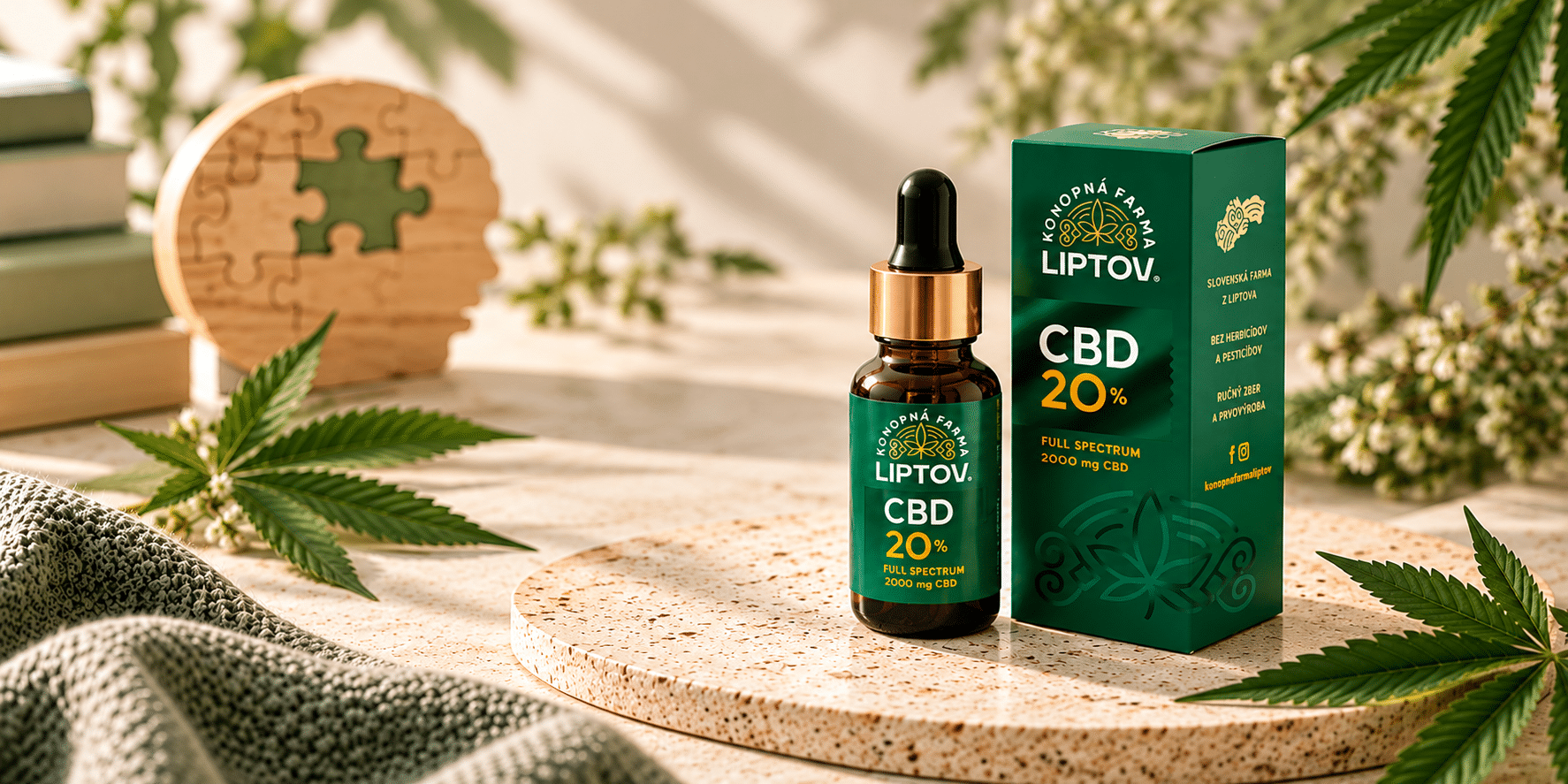
How to Choose Which CBD to Buy: A Guide for First-Time Buyers
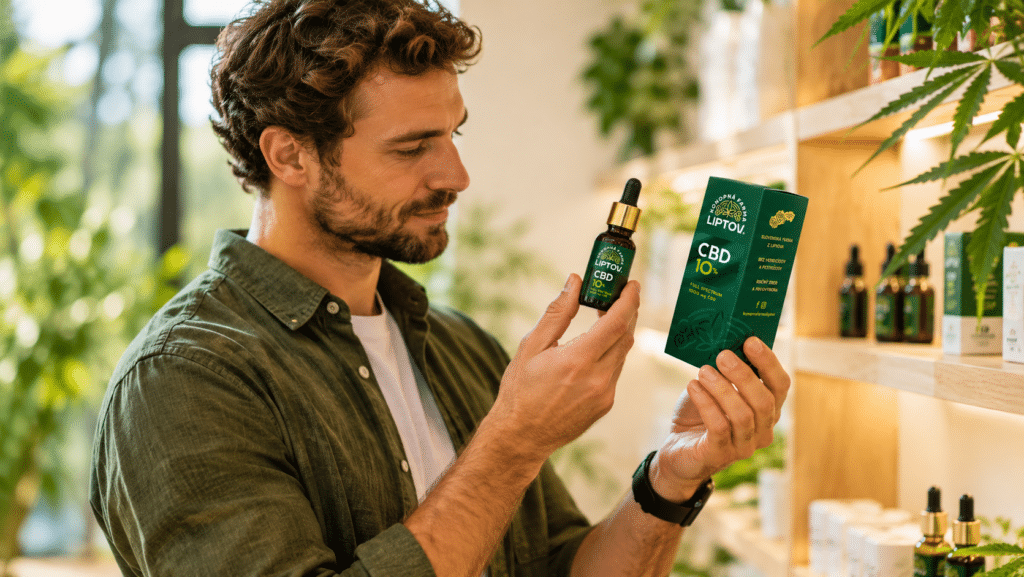
Your first CBD purchase can feel overwhelming. Oils, capsules, gummies, percentages ranging from 5 to 30, full-spectrum versus isolate, prices from a few euros to dozens — and everyone claims their product is the best. It is easy to get lost.
The good news is that the decision about which CBD to buy can be simplified to a handful of questions. Work through these four and you will know exactly what to look for.
Question 1: What Do You Actually Want CBD For?
This is the absolute starting point when deciding which CBD to buy, and it determines everything else. Different problems call for different forms and concentrations.
- Sleep, anxiety, stress, general wellbeing → oral CBD oil (drops), which acts systemically
- Joint pain, muscle pain, skin problem → a topical form — a balm applied directly to the area
- Chronic pain or inflammation → often a combination of oil and topical
- Just want to try it → start with a lower-concentration oil; it is the most versatile option
If you are unsure which form suits which purpose, the article How CBD Drops Work Compared to Other Delivery Methods covers this in full. Once you are clear on your goal, let us move to the specific product.
Question 2: What Concentration Should You Choose?
Concentration is the percentage of CBD in the oil — and this is where beginners make the most mistakes. Some buy too weak an oil and are disappointed when they feel nothing; others jump straight to the strongest and overspend needlessly.
A simple guide:
- 5% oil (approximately 2.5 mg CBD per drop) — for beginners, mild issues, wellness and a first introduction to CBD
- 10% oil (approximately 5 mg per drop) — the most versatile option, suitable for anxiety, sleep and moderate pain
- 15% oil (approximately 7.5 mg per drop) — for more experienced users or more significant issues where a weaker oil would require too many drops
The logic is simple: the higher the concentration, the fewer drops you need per dose. When you need higher doses regularly, a stronger oil also makes economic sense because the bottle lasts longer.
For most people just starting out, the sensible choice is a 5% CBD oil or a 10% CBD oil. How to set your dose precisely is covered in the article How to Dose CBD.
Question 3: Full-Spectrum, Broad-Spectrum or Isolate?
This decision sounds technical but is straightforward in practice.
- Full-spectrum — contains the whole plant including trace THC (below 0.3%). The strongest effect thanks to the so-called entourage effect. The choice for most people.
- Broad-spectrum — the same, but without THC. For those subject to drug testing or who want to avoid THC entirely.
- Isolate — pure CBD, nothing else. For maximum purity or sensitivity to terpenes.
For a standard user who is not subject to testing, full-spectrum is the best choice — it has the most research behind it and the strongest overall profile. A detailed comparison is in the article Full-Spectrum, Broad-Spectrum and Isolate: What Is the Difference.
Question 4: How to Find a Trustworthy Shop
Once you know which CBD to buy in terms of form, concentration and type, one thing remains — buying it from someone you can trust. The market is full of products that do not contain what they claim.
A reliable seller can be identified by these signs:
- Publishes a laboratory certificate (COA) directly on the product page or on request
- States the origin of the hemp and how it was grown — ideally European, pesticide-free
- Declares CBD content in milligrams, not just as a percentage
- Has a real address, history and contact details, not just a contact form
- Does not make exaggerated claims about treating diseases
- Has transparent ingredients and a production date
If a shop hides these things or does not have them, that is a warning sign. A detailed guide on how to verify quality and read a certificate is in the article How to Identify Certified CBD Products.
One of the greatest reassurances is when a seller grows their own hemp. That means control over the entire chain from field to bottle, not just over the packaging of a purchased ingredient. That is exactly how things work on our farm under Kriváň.
What to Watch Out for on Your First Purchase
A few traps that first-time buyers fall into most often:
- Suspiciously low price — quality CBD extract is not cheap; an extremely cheap oil usually means little CBD or no independent testing
- Confusing “hemp oil” with CBD — a product labelled only as hemp seed oil does not contain CBD. The difference is explained in the article Hemp Oil vs CBD Oil: What Is the Difference
- Percentages without milligrams — always calculate total CBD content, not just percentages
- Promises of curing conditions — a legal CBD product is a supplement, not a medicine, and cannot claim to treat diseases
- Buying the strongest oil immediately — start lower and work up; you will save money
A Quick Recommendation on Which CBD to Buy
If you want a simple, no-fuss recommendation on which CBD to buy, here is a safe starting point:
- Form: CBD oil (drops) — the most versatile
- Concentration: 5% or 10%
- Type: full-spectrum
- Seller: one with a laboratory certificate who states the origin of the hemp
- Dosing: start with 10–15 mg daily, increase after a week as needed
With this setup you will rarely go wrong and you will have a solid foundation to refine from.
FAQ
What concentration should I choose as a beginner?
For a start, 5% or 10% is ideal. A 5% oil is the gentlest introduction; 10% is more versatile and lasts longer. Leave 15% for later if you find you need higher doses.
Does a more expensive CBD automatically mean better quality?
A high price does not guarantee quality, and a low price does not automatically disqualify a product. What matters is the CBD content in milligrams, the type of extract and whether the product has a laboratory certificate. Compare the price per milligram of CBD, not per bottle.
Where is the best place to buy CBD in a pharmacy, a shop or online?
It depends on the individual seller, not the channel. What matters is whether they publish a certificate, state the origin of the hemp and have transparent ingredients. Online sellers who grow their own hemp are often a good option.
How do I know the oil contains what it claims?
Only from a laboratory certificate (COA) for that specific batch. Match the CBD content on the certificate against the label and check that the batch number corresponds.
Should I start with oil or gummies?
Oil is more practical for a first purchase —it has better bioavailability and more precise dosing. Gummies and capsules are more convenient but less efficient.
Summary
When figuring out which CBD to buy, all you need to do is answer four questions: what you want it for, what concentration you need, which type of extract, and from whom you will buy it. For most beginners, the right choice is a full-spectrum oil at 5% or 10% concentration from a seller with a laboratory certificate.
The most important point: do not buy based on price or the biggest number on the label — buy based on what you can verify. A certificate, the origin of the hemp and transparent ingredients say more than any marketing.
The hemp on our farm under Kriváň is grown by hand without pesticides, and every batch of CBD oils comes with an independent laboratory report, so you know exactly what you are buying.
Sources
- The Juice Warehouse, How to Identify High Quality CBD: Your Complete Quality Guide
- Cornbread Hemp, How to Choose CBD Oil
- Verywell Health, What Is Full Spectrum CBD?
- Simply CBD, 6 Ways to Identify a High-Quality CBD Product
- WHO Expert Committee on Drug Dependence, Cannabidiol Critical Review Report, 2018
Author of the article

Other articles

Does CBD Help with Psoriasis? What the Research Says
Psoriasis can seriously disrupt daily life — itching, flaking, skin tension and patches that come...