Is CBD Similar to Opioids?
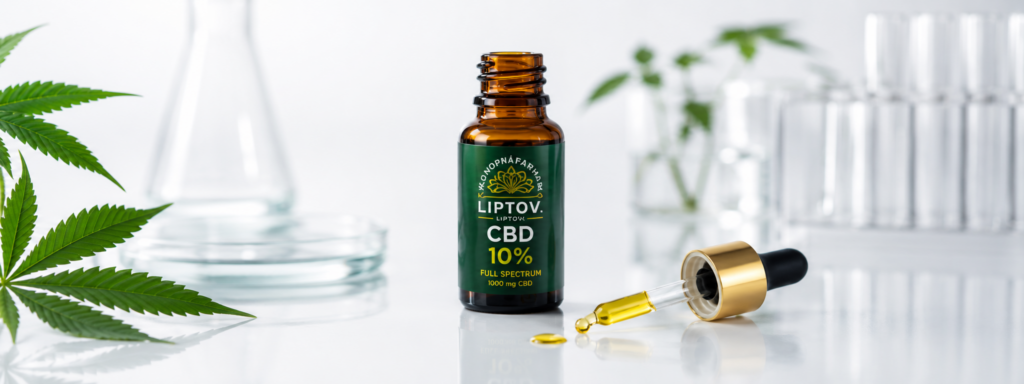
The question of whether CBD and opioids are related substances comes up regularly — especially in the context of searching for safer alternatives to traditional analgesics for chronic pain. In this article, we look at how cannabidiol fundamentally differs from opioid substances in mechanism of action, addiction risk, and lethality, and what current research suggests about CBD potentially helping people who are dependent on opioids.
Short Answer: No, CBD and Opioids Are Completely Different Substances
For those who need a quick answer:
- CBD and opioids do not act on the same receptors in the brain
- CBD has no addictive potential according to the WHO; opioids are among the most habit-forming substances known
- CBD does not cause respiratory depression — which is responsible for the majority of opioid overdose deaths
- CBD is classified in the EU as a dietary supplement; opioids are medicines subject to strict medical prescription
Nevertheless, there is interesting research suggesting that CBD could be a useful aid for patients trying to reduce opioid consumption or managing withdrawal symptoms. We will get to this in the next section.
What Are Opioids and How Do They Act in the Body?
Opioids are a broad group of substances that act on opioid receptors in the central nervous system. They include natural substances (morphine, codeine from the poppy — Papaver somniferum), semi-synthetic derivatives (heroin, oxycodone, hydrocodone), and fully synthetic compounds (fentanyl, tramadol, methadone).
In the body, opioids bind primarily to three types of receptors:
- μ (mu) receptors — most important for analgesia and euphoria; also responsible for respiratory depression
- δ (delta) receptors — modulate mood and emotional responses
- κ (kappa) receptors — analgesia, but also dysphoria with stronger activation
Activation of these receptors leads to:
- Strong suppression of pain perception
- A sense of euphoria and relaxation
- Slowed breathing and heart rate
- Narrowing of the pupils
- Constipation and nausea
Respiratory depression (slowing and cessation of breathing) is the reason opioid overdose can be fatal — in the US, more than 80,000 people die from opioid overdose every year, most often from combining fentanyl with heroin or prescribed medications.
Opioids also carry a high addictive potential. With regular use, the body builds tolerance (requiring ever higher doses for the same effect), and discontinuation triggers withdrawal syndrome with severe physical and psychological manifestations.
How CBD Acts — A Completely Different Pharmacological System
CBD does not act through opioid receptors at all. Its primary target is the endocannabinoid system (ECS) — a network of receptors and signalling molecules discovered by science only in the 1990s, even though cannabidiol itself was isolated as far back as 1940.
The main receptors CBD acts on:
- CB1 receptor — CBD is a negative allosteric modulator; it reduces CB1 activity (unlike THC, which activates it)
- CB2 receptor — modulation of the immune and inflammatory system
- 5-HT1A (serotonin) receptor — anxiolytic effect, sleep support
- TRPV1 — channels for pain and heat perception
- GPR55, PPARγ — additional metabolic and anti-inflammatory pathways
This profile is fundamentally different from opioids. CBD has none of the following properties:
- Does not increase dopamine levels in the nucleus accumbens (the reward centre) in the classical way
- Does not cause euphoria or a “high”
- Does not suppress breathing
- Does not induce physical dependence
- Has no withdrawal syndrome
A detailed overview of the mechanisms can be found in the article Does CBD contain THC?.
CBD and Opioids in Direct Comparison
To make the difference completely clear, let us look at a direct side-by-side comparison of the key parameters that distinguish CBD from opioids:
| Parameter | Opioids | CBD |
|---|---|---|
| Origin | Poppy (Papaver somniferum) or synthesis | Hemp (Cannabis sativa) |
| Main receptors | μ, δ, κ opioid | CB1, CB2, 5-HT1A, TRPV1 |
| Addictive potential | Very high | None (WHO 2018) |
| Tolerance | Develops rapidly | Minimal |
| Withdrawal syndrome | Severe, sometimes life-threatening | None |
| Respiratory depression | Yes, fatal at overdose | No |
| Euphoria / “high” | Yes, strong | No |
| Death from overdose | Yes, frequent | None recorded |
| Classification (EU) | Prescription-only medicines | Dietary supplement |
| Suitable for long-term use | Only under strict supervision | Yes, well tolerated |
As you can see, CBD and opioids belong to completely different categories of substances — not only chemically, but also clinically, regulatorily, and in terms of safety. Claiming they are “similar” would be about as accurate as saying that coffee extract and heroin are similar because both affect the nervous system.
CBD as an Aid in Opioid Addiction — Promising Research
This is where the most fascinating part begins. While opioids cause addiction, CBD is being studied as a possible aid in its treatment. Several serious clinical studies have shown promising results.
Landmark Hurd 2019 Study (American Journal of Psychiatry)
The study by Yasmin Hurd and colleagues from the Icahn School of Medicine at Mount Sinai, published in American Journal of Psychiatry, included 42 abstinent patients with heroin use disorder. Participants received CBD in doses of 400 or 800 mg daily for 3 days or placebo, and were then exposed to drug-related cues.
Results:
- CBD significantly reduced cravings triggered by cues
- Reduced anxiety associated with cues
- The effect persisted for at least 1 week after the last dose
- Also reduced physiological stress markers (cortisol, heart rate)
- No serious adverse effects
Study author Hurd emphasised that CBD meets the criteria for an ideal adjunct to opioid addiction treatment: it is not an opioid, it is not addictive, it acts relatively long, and it reduces anxiety, which is ubiquitous in patients with addictive disorders.
Mount Sinai and NIH HEAL Initiative
Following Hurd 2019, the NIH HEAL Initiative (the federal programme addressing the opioid crisis in the US) became involved in funding further research. The Mount Sinai CBD Research Program is currently conducting neuroimaging studies tracking how CBD influences brain circuits involved in craving using MRI and MR spectroscopy.
Yale Study 2025
The latest research from Yale School of Medicine examined how CBD affects pain perception in patients being treated with methadone or buprenorphine (the standard substitution medications for opioid use disorder). Participants received escalating doses of CBD (400, 800, 1,200 mg). The results suggested that CBD can alter pain sensitivity in a dose- and treatment-dependent manner, opening a path towards personalised use within substitution therapy.
Managing Withdrawal Symptoms
A recent review article published in PMC in 2022 summarised preclinical and clinical evidence indicating that CBD reduces morphine withdrawal symptoms in animals and has the potential to help people with craving, pain, anxiety, and nausea — all typical components of opioid withdrawal.
Can CBD Reduce the Need for Opioids in Chronic Pain?
This area indirectly complements the comparison of CBD and opioids. Anonymous surveys among chronic pain patients in the US have repeatedly shown that 30–50% of CBD users reduced or completely discontinued opioid treatment they had previously been taking. Studies from US states where medical cannabis is legal additionally document lower rates of opioid prescriptions and lower mortality from opioid overdose compared to states without access to cannabinoids.
In chronic pain, CBD may support opioid reduction through:
- Its own analgesic effect — especially in neuropathic and inflammatory pain
- Reducing anxiety, which amplifies pain perception
- Improving sleep, which helps the body recover
- Probable synergy with opioids — preclinical studies suggest CBD may potentiate the analgesic effect of lower opioid doses
Very important warning: any reduction in prescribed opioid treatment must take place under the supervision of the treating physician. Abrupt discontinuation of opioids can trigger serious withdrawal syndrome and, in some patients, worsening of the original pain. Self-treatment in this context is extremely risky.
Practical Aspects for Patients
The opioid crisis in Central Europe does not reach the scale seen in the US, but consumption of strong opioids (oxycodone, tramadol, fentanyl patches) has been rising in recent years.
For a patient who is already taking opioids and is considering CBD, the following practical principles apply:
- Always consult your prescribing physician first
- CBD does not act through opioid receptors, so it cannot substitutionally replace an opioid dose — it can, however, be a supportive component of a reduction strategy
- Possible interactions between CBD and some opioids (especially fentanyl and oxycodone) via hepatic enzymes CYP3A4 and CYP2D6 require medical consultation
- Start at a low CBD dose (10–20 mg daily) and gradually increase it according to the guide in the article How to Dose CBD: How Much to Take and How to Start
- Choose certified full-spectrum CBD oils where the exact CBD and THC content is known
CBD is not a medicine and cannot be prescribed for the treatment of addiction. It serves as an over-the-counter dietary supplement and topical product.
Common Myths About CBD and Opioids
Several misleading ideas circulate around the comparison of CBD and opioids. Here are the most frequent:
- “CBD is also a drug, just cheaper” — no. CBD is not a drug in the sense of a psychoactive substance, nor in the sense of an addictive one. It is a natural cannabinoid with no psychoactive properties.
- “CBD, like opioids, causes respiratory depression” — no. CBD has no affinity for opioid receptors and does not slow breathing even at high doses up to 1,500 mg daily (according to WHO).
- “If CBD helps with pain, it must be addictive” — no. The mechanism of CBD’s analgesic effect is completely different from opioids and does not involve the dopamine reward pathway that causes addiction.
- “CBD can replace my opioids overnight” — no. CBD does not act through opioid receptors, so it cannot directly replace an opioid dose. Any reduction in opioids must be gradual and under medical supervision.
- “Doctors recommend CBD instead of opioids” — the situation is nuanced. CBD is not a registered medicine (with the exception of Epidiolex for epilepsy), so doctors do not officially prescribe it. Some do, however, acknowledge CBD as a supplement within complex chronic pain management.
Frequently Asked Questions About CBD and Opioids
Can I take CBD together with opioids prescribed by my doctor?
Theoretically yes, but interactions exist through hepatic enzymes CYP3A4 and CYP2D6, which metabolise fentanyl, oxycodone, and tramadol, among others. CBD can alter their blood levels. Always consult your doctor or pharmacist before combining them.
Will CBD help me discontinue opioid treatment?
There are promising studies (Hurd 2019, Mount Sinai) suggesting that CBD can help with craving and anxiety during abstinence. However, these involve study doses of 400–800 mg daily under medical supervision — not self-treatment with over-the-counter oils.
If I use CBD and undergo a drug test, will it show opioids?
No. Drug tests for opioids detect specific molecules (morphine, codeine, oxycodone, their metabolites). CBD and its metabolites do not fall into these categories. With full-spectrum CBD oil there is a small risk of a positive result for THC, but not for opioids.
Will CBD cause tolerance with regular use, like opioids?
Clinical data suggest that CBD does not induce significant tolerance — users typically remain on a similar dose over the long term. This is a significant difference from opioids, where tolerance grows rapidly.
Is there a risk of CBD addiction as with opioids?
No. The WHO in its Critical Review Report of 2018 unequivocally stated that CBD has no addictive potential and has shown no signs of abuse. This is the opposite of the situation with opioids.
Summary: CBD and Opioids Stand on Opposite Sides
The short answer to the question “is CBD similar to opioids” is clear: no. CBD and opioids act on completely different receptor systems, CBD has no addictive potential, does not cause euphoria or respiratory depression, and is classified as a dietary supplement in Europe. Paradoxically, current research shows that CBD could be a valuable supportive component of opioid addiction treatment and strategies for reducing opioid consumption in chronic pain. For any adjustment to opioid treatment, however, consultation with a doctor is essential. When choosing CBD, opt for transparent full-spectrum oils — at our farm beneath Kriváň, we grow hemp by hand without pesticides and ensure laboratory quality control of every product.
Sources
- Hurd YL et al. Cannabidiol for the Reduction of Cue-Induced Craving and Anxiety in Drug-Abstinent Individuals With Heroin Use Disorder: A Double-Blind Randomized Placebo-Controlled Trial. Am J Psychiatry, 2019;176(11):911-922
- NIH HEAL Initiative, Can CBD Treat Opioid Use Disorder?
- Mount Sinai, CBD Research Program — Addiction Institute
- Suzuki J et al. Adjunctive Management of Opioid Withdrawal with the Nonopioid Medication Cannabidiol. PMC 2022
- WHO Expert Committee on Drug Dependence, Cannabidiol (CBD) Critical Review Report, 2018
- Yale School of Medicine, Exploring the effects of cannabidiol on pain sensitivity in patients on MOUD, 2025
Author of the article

Som jeden zo zakladateľov Konopnej farmy Liptov. Láska k prírode, pracovitosť, zmysel pre detail a túžba mať vlastné dielo, ma priviedli v roku 2019 ku krokom, kde som si spolu so svojím kamarátom založil Konopnú farmu Liptov. Postupne a trpezlivo budujeme silnú a stabilnú firmu tehlu po tehličke, aby sme svojou prácou pomáhali ľuďom a podporili Slovenskú ekonomiku, hospodárstvo a prírodu.
Other articles

How CBD Drops Work Compared to Other Forms of Delivery
CBD is now available in dozens of forms — drops, capsules, gummies, balms, drinks, vape cartridge...