Can CBD Help With Quitting Smoking?
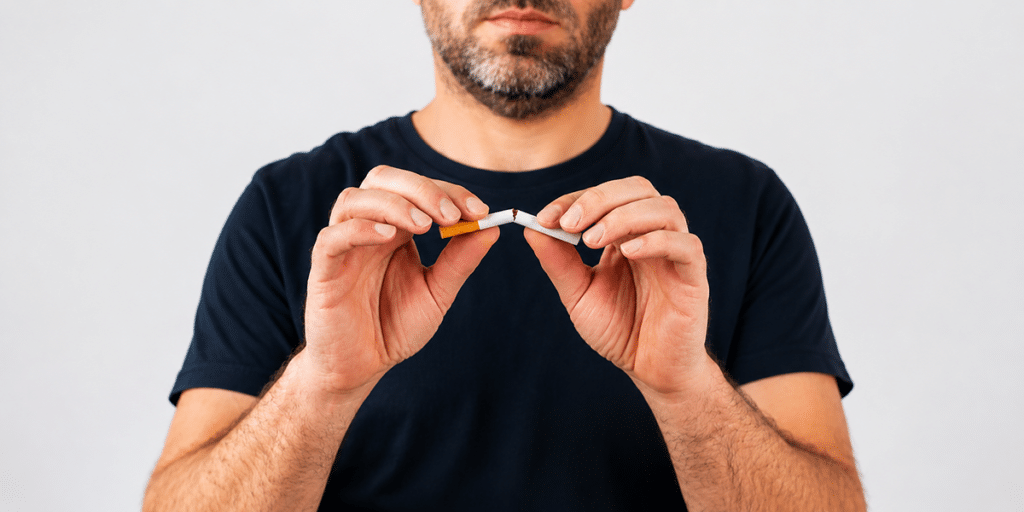
Across Europe roughly one in four adults smokes, and about half of all smokers would like to quit — yet only a small fraction succeed despite the availability of nicotine replacement therapies. One of the newest research directions in the fight against nicotine dependence is CBD for quitting smoking — cannabidiol that has produced surprisingly promising results in clinical studies thanks to its anxiolytic and anti-craving activity. In this article you will see what studies from University College London found, how CBD affects the brain circuits responsible for smoking triggers, and what practical doses and approaches you can try if you decide to stop.
Quick Answer: Early Research Looks Promising
For those who need a fast answer:
- Two clinical studies from UCL demonstrated that CBD reduces the number of cigarettes smoked and weakens the pull of smoking cues
- CBD is not a registered medicine for smoking cessation and does not replace proven methods such as nicotine replacement therapy or behavioural treatment
- It works through a combination of mechanisms — anxiolytic effect, reduction of cue salience, modulation of the endocannabinoid system
- Best results are achieved in combination with other methods (psychological support, a quit plan)
- CBD is non-addictive and can be a safe aid during the difficult phase of stopping
Let us now look at the evidence behind these claims and how you can put CBD to practical use.
Why Quitting Smoking Is So Difficult
Before examining how CBD helps with quitting smoking, we need to understand why nicotine dependence is so resistant to quit attempts. Three main factors:
- Physical dependence on nicotine — the body adapts to a regular nicotine supply; withdrawal triggers an abstinence syndrome with anxiety, irritability, inability to concentrate, and physical symptoms
- Cue salience — the smoker’s brain builds strong associations: morning coffee = cigarette, work break = cigarette, stress = cigarette. These cues trigger an automatic urge to smoke before you are even consciously aware of it
- Psychological and social component — smoking is a ritual, part of identity and a way to feel “okay”; losing it means not just a biological change but a behavioural one
Conventional methods (patches, gums, varenicline, bupropion) primarily target nicotine replacement or receptor blockade. CBD works through a different mechanism — it does not target nicotine directly, but modifies the anxiety and influence of triggers associated with smoking.
What Clinical Studies Found About CBD for Quitting Smoking
Over the past decade CBD and smoking has become the subject of serious clinical research, particularly at British universities. Here are the three most important studies.
Morgan 2013 — Pilot With 40% Cigarette Reduction
The breakthrough pilot study by Celia Morgan and colleagues from University College London, published in Addictive Behaviors, followed 24 smokers who were given either a CBD inhaler or a placebo inhaler for one week. Participants were instructed to use the inhaler whenever they felt the urge to smoke. Results were remarkable:
- The CBD group reduced the number of cigarettes smoked by approximately 40% during the week
- The placebo group showed no change in cigarette count
- Subjective craving did not differ between groups — CBD helped without participants feeling less desire
- No serious adverse effects
This was the first human study to suggest that CBD may have a clinically relevant effect on smoking behaviour.
Hindocha 2018 — How CBD Weakens Smoking Triggers
The study by Hindocha and colleagues, published in Addiction, focused on the mechanism of CBD in smoking cessation. Thirty dependent smokers, abstinent for 12 hours, received either 800 mg CBD orally or placebo. Researchers then showed them images of cigarettes and other stimuli and measured how quickly and intensely they reacted (attentional bias).
Results:
- CBD reduced attentional bias to cigarette cues — smokers reacted less intensely to images of cigarettes
- Participants in the CBD group rated cigarette images as less pleasant
- Subjective craving intensity was unchanged, but automatic attention to cigarettes decreased
- No intoxicating or sedative effects
Practical implication: CBD may help interrupt the automatic response to smoking triggers, which is one of the main causes of relapse during cessation.
Gournay 2023 — E-cigarettes and Withdrawal Symptoms
The most recent published study, from 2023 in Cannabis and Cannabinoid Research, tested 320 mg CBD orally in 20 daily nicotine e-cigarette users during a 4-hour abstinence period. The result:
- CBD reduced the intensity of withdrawal symptoms (anxiety, irritability, inability to concentrate)
- It also reduced subjective anxiety during the period without vaping
- This is an open-label design, so results need confirmation in a double-blind trial
Combined with preclinical data (Smith 2021 showing that CBD reduces physical nicotine withdrawal signs in animals), CBD and smoking is becoming an increasingly seriously studied area.
How CBD for Quitting Smoking Works
The mechanism by which CBD may help people stop smoking is complex and not yet fully understood. We do know, however, that CBD acts on several neurochemical systems linked to addiction:
- Activation of 5-HT1A serotonin receptors — reduction of anxiety, which is the main symptom of nicotine withdrawal
- Modulation of the endocannabinoid system — the endocannabinoid system is closely connected to the reward pathway activated by nicotine
- Reduction of attentional bias — CBD weakens the automatic attention given to smoking cues
- Influence on nicotine metabolism — some studies suggest CBD affects CYP450 liver enzymes that process nicotine
- Pro-cognitive effects — CBD may ease memory and impulse-control deficits that appear during abstinence
- Anti-inflammatory action — may help with the recovery of lung tissue after years of smoking
For a detailed overview of how CBD acts in the body, see the article CBD drops and their effects.
Practical Tips: How to Use CBD When Trying to Quit Smoking
If you decide to try CBD during cessation, follow these practical guidelines:
- Choose a quit date and start CBD 1–2 weeks beforehand so that levels in the body can stabilise
- Start at a low dose — 20–30 mg CBD per day, split between morning and evening
- After the first week increase to 40–80 mg per day, depending on the intensity of withdrawal symptoms
- For an acute urge to smoke you can take an additional 10–20 mg sublingually — the effect arrives within 15–30 minutes
- Combine with behavioural techniques — breathing exercises, a walk, chewing an alternative
- Keep a journal — when you had the strongest urges, what helped, what did not
- Be patient — CBD’s effect is cumulative; the best results come after 2–4 weeks of regular use
For practical use, CBD oil 10% full spectrum is a good fit — each drop contains 5 mg CBD, making it easy to measure the right amount. A detailed protocol for safe dose escalation can be found in the article How to dose CBD: how much to take and how to start.
Realistic expectations: CBD is not a magic pill. Clinical studies showed a 40% reduction in cigarettes, but did not fully free smokers from their addiction. It works best as a supplement to a comprehensive cessation strategy that includes motivation, social support, and if needed professional help.
CBD and Other Addictions — a Broader View
Although most of this article focuses on smoking, CBD is also being studied for other addictive substances. Here is a brief look at other areas.
Opioid Dependence
The strongest evidence exists for CBD in opioid dependence, thanks to the Hurd 2019 study published in American Journal of Psychiatry, where CBD reduced cravings in heroin-dependent patients. Details are in the article Is CBD similar to opioids?.
Alcohol Dependence
A 2025 preclinical study showed that chronic CBD administration alleviates physical symptoms of alcohol withdrawal in animals and protects brain regions responsible for anxiety. Human clinical trials are ongoing.
Cannabis (THC) Dependence
Paradoxically, CBD may also help with cannabis dependence — by modulating the endocannabinoid system in the opposite direction to THC. Several smaller studies indicated reduced cravings and withdrawal symptoms after stopping cannabis.
Stimulant Dependence (Cocaine, Methamphetamine)
Evidence here is still largely limited to preclinical research. Some animal studies suggest CBD could modulate the dopamine system and reduce cue-induced craving, but human randomised trials are lacking.
For a wider understanding of whether CBD itself is addictive, read the article Is CBD addictive or habit-forming?, where we cover the safety profile of cannabidiol in detail.
What CBD for Quitting Smoking CANNOT Do
For a fair picture, here is what you should NOT expect from CBD during cessation:
- It will not eliminate physical nicotine dependence overnight — withdrawal symptoms (anxiety, irritability, hunger) remain, though CBD may reduce them
- It does not replace nicotine in the body the way patches or gums do
- It does not eliminate the psychological and behavioural component of dependence — the rituals around cigarettes need to be broken behaviourally, not biochemically
- It does not guarantee success — in the Morgan 2013 study most participants continued to smoke, just less
- It is not an official treatment in the EU or USA — CBD in this context is a food supplement, not a medicine
If you are looking for a comprehensive cessation programme, consult your GP about nicotine replacement therapy or seek a referral to an addiction treatment service.
Safety and Considerations When Combining CBD With Cessation
CBD is generally well tolerated, but when using it during smoking cessation pay attention to a few things:
- Concurrent use of varenicline (Champix/Chantix) or bupropion (Wellbutrin/Zyban) — possible interactions via liver enzymes; consult your doctor
- Combination with antidepressants — especially SSRIs; CBD may potentiate their effect
- Pregnancy and breastfeeding — not recommended
- Monitor liver enzymes with long-term daily use above 100 mg/day
- Choose certified products with declared CBD content — accuracy matters when experimenting with doses
For a detailed safety overview, see the article Is it okay to use CBD daily?.
Combining CBD With Other Cessation Methods
CBD for quitting smoking works best as a complement, not a standalone strategy. Here is how it pairs with other evidence-based methods:
- CBD + nicotine replacement therapy (NRT) — patches, gums or lozenges address the physical nicotine craving, while CBD reduces anxiety and attentional bias. This combination may be more effective than either approach alone; no adverse interactions are known.
- CBD + behavioural therapy (CBT) — working with an addiction specialist gives you a structured plan; CBD helps you get through the hardest moments between sessions.
- CBD + mindfulness and breathing — during an acute craving, combine a sublingual CBD dose with 4-7-8 breathing (inhale 4 seconds, hold 7, exhale 8); the effects are synergistic.
- CBD + physical activity — regular exercise reduces cravings and improves mood; CBD supports post-exercise recovery and sleep quality.
- CBD + social support — involve family, a partner, or cessation groups (online or in person); CBD is biochemical support, but motivation is a social factor.
Conversely, avoid combining CBD with cessation medicines such as varenicline (Champix) or bupropion (Wellbutrin/Zyban) without medical consultation — these drugs have specific hepatic metabolisms and the combination may alter their plasma levels.
FAQ About CBD for Quitting Smoking
How long do I need to take CBD before I lose the craving for a cigarette?
The acute anxiolytic effect of CBD arrives within 30–60 minutes of a sublingual dose. A lasting effect on smoking behaviour develops over 2–4 weeks of regular use. In the Morgan 2013 study, the 40% reduction appeared within the first week.
Can I use CBD after quitting to avoid going back to smoking?
Yes. Many former smokers use CBD as long-term relapse prevention, especially during the first 3–6 months after quitting, when the risk of return is highest. The effect on anxiety and general wellbeing can help manage stressful situations without reaching for a cigarette.
Does CBD work for vaping or heated tobacco products (IQOS) too?
Yes. The Gournay 2023 study focused specifically on nicotine e-cigarettes and showed a reduction in withdrawal symptoms with 320 mg CBD. The principle is the same — regardless of whether you consume nicotine through cigarettes, e-cigarettes or IQOS, the dependence mechanism is identical.
What is the best timing for CBD during cessation?
The most effective approach is split dosing twice daily (morning and evening) for a stable CBD level in the body, plus an acute sublingual dose during a strong urge to smoke (15–30 minutes in advance as prevention, or during a craving episode).
Will CBD help even if I have smoked for 20+ years?
Yes, the length of smoking history does not change the mechanism by which CBD works. Long-term smokers, however, typically have a stronger psychological and physical dependence component and may need a combination of CBD with nicotine replacement and behavioural therapy.
Summary: CBD as a Promising but Complementary Cessation Aid
Current research suggests that CBD for quitting smoking can be a useful supportive component of a cessation strategy — particularly through anxiety reduction, weakening of attentional bias to smoking cues, and overall tolerability. Clinical studies from University College London showed promising results in reducing cigarette numbers, but CBD is not a registered medicine and works best in combination with behavioural intervention. If you want to try CBD for cessation, choose certified full-spectrum oils — at our farm under the Kriváň peak we grow hemp by hand without pesticides and offer full-spectrum CBD oils with transparent composition. For more on CBD and addiction, see the related articles Is CBD similar to opioids? and Is CBD addictive or habit-forming?.
Sources
- Morgan CJA et al. Cannabidiol reduces cigarette consumption in tobacco smokers: Preliminary findings. Addictive Behaviors, 2013;38(9):2433-2436
- Hindocha C et al. Cannabidiol reverses attentional bias to cigarette cues in a human experimental model of tobacco withdrawal. Addiction, 2018;113(9):1696-1705
- Hindocha C et al. The effects of cannabidiol on impulsivity and memory during abstinence in cigarette dependent smokers. Scientific Reports, 2018;8:7568
- Gournay LR et al. Cannabidiol Reduces Nicotine Withdrawal Severity and State Anxiety During an Acute E-cigarette Abstinence Period: A Novel, Open-Label Study. Cannabis and Cannabinoid Research, 2023
- Hurd YL et al. Cannabidiol for the Reduction of Cue-Induced Craving and Anxiety in Drug-Abstinent Individuals With Heroin Use Disorder. American Journal of Psychiatry, 2019
- WHO Expert Committee on Drug Dependence, Cannabidiol (CBD) Critical Review Report, 2018
Author of the article

Konope sa venujem približne siedmy rok. Prvé dva roky som hlavne zoznamoval a čerpal informácie o jej pestovaní. Aktívnemu pestovanie konope sa venujem od roku 2019. Na konope sa mi páči jeho neskutočná rozmanitosť ako je napríklad rôzna vôňa od citrusových cez intenzívne sladké vône až po ťažšie vínovo-zemité vône. Samozrejme aj skladba konope a jej kvetov a farebná pestrosť. Tak isto jej liečebné vlastnosti sú na nezaplatenie. Je to prírodný ničiteľ ťažkých kovov v pôde. Za mňa je to jedna z najviac, prírode a zdraviu prospešnych rastlín na svete.
Other articles

Does CBD Help with Stress? How It Works and What to Expect
Stress is different from anxiety. Anxiety is a state of mind; stress is a whole-body response — h...